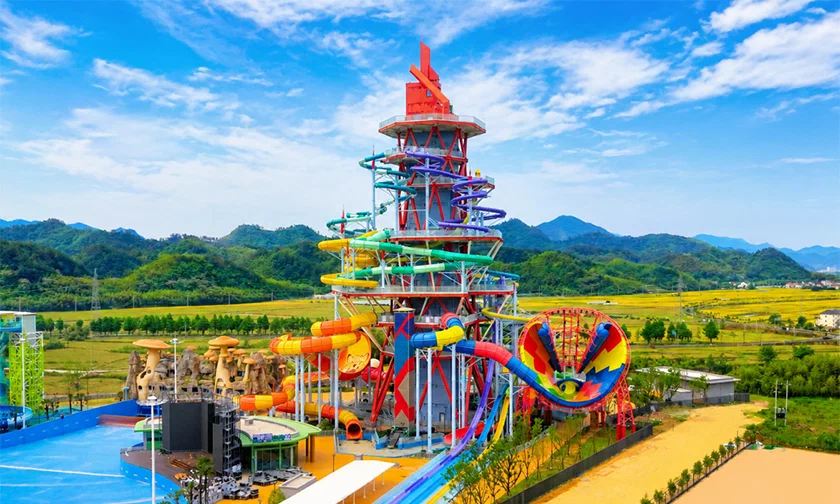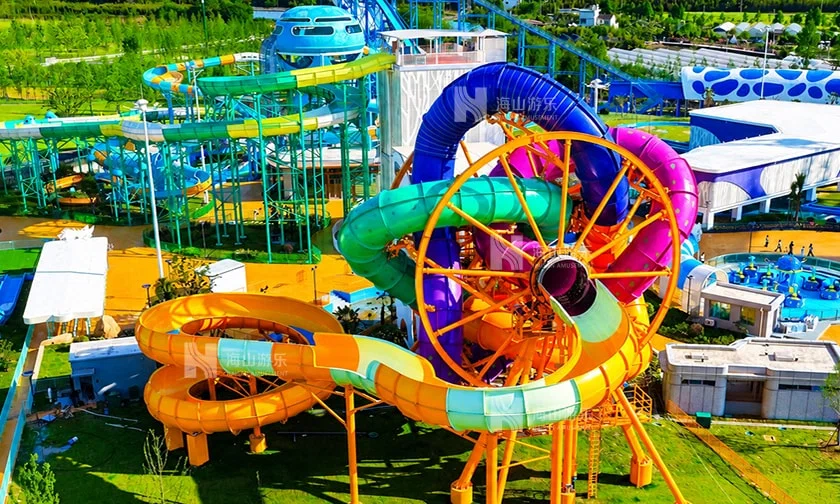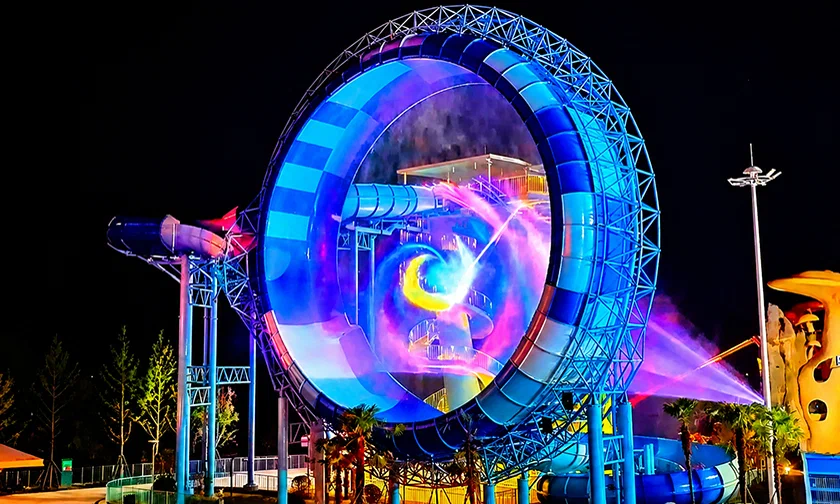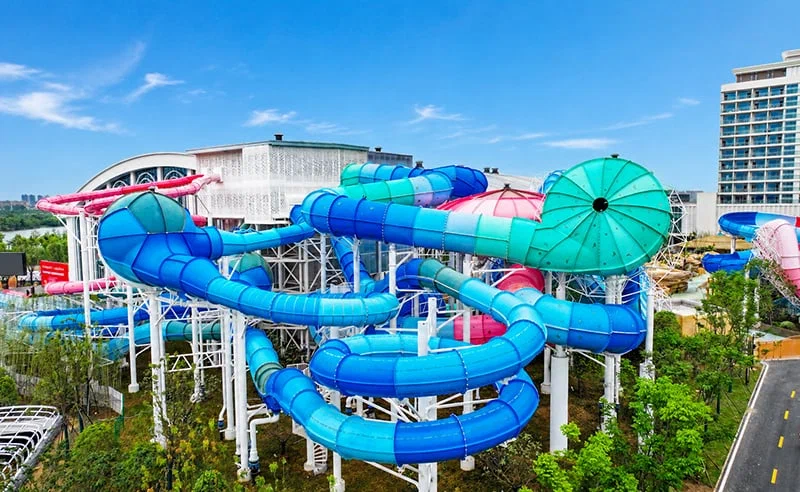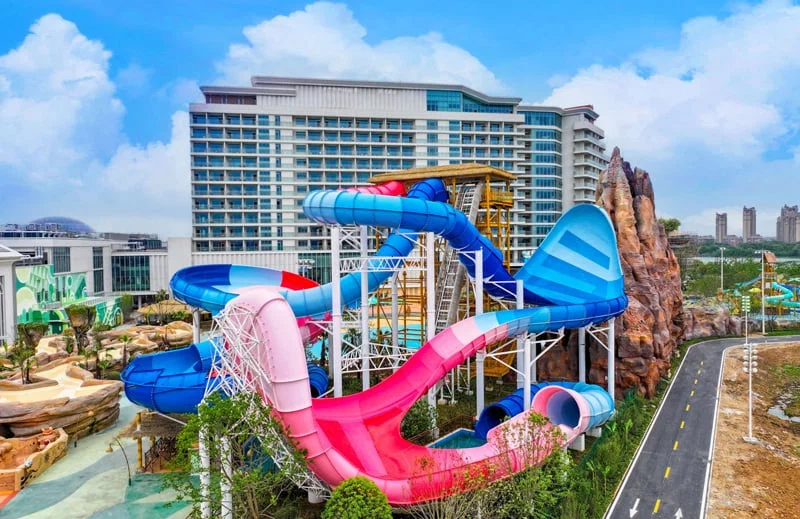
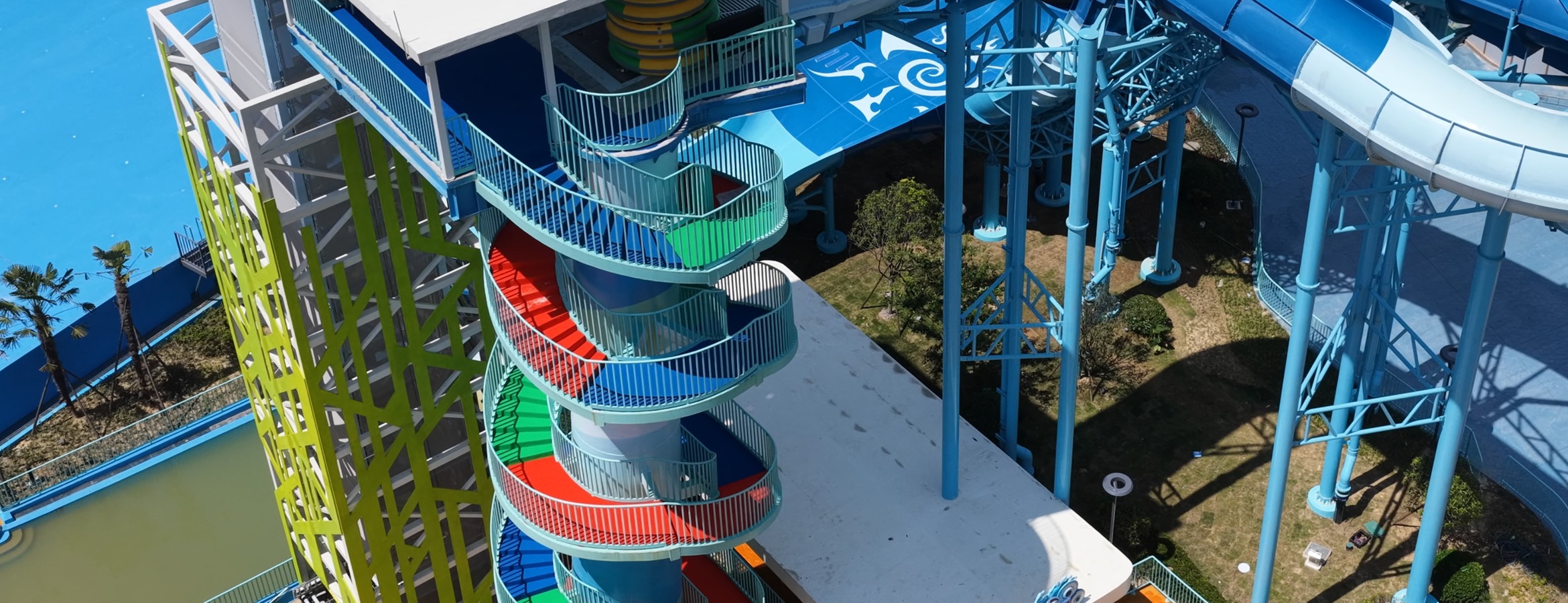
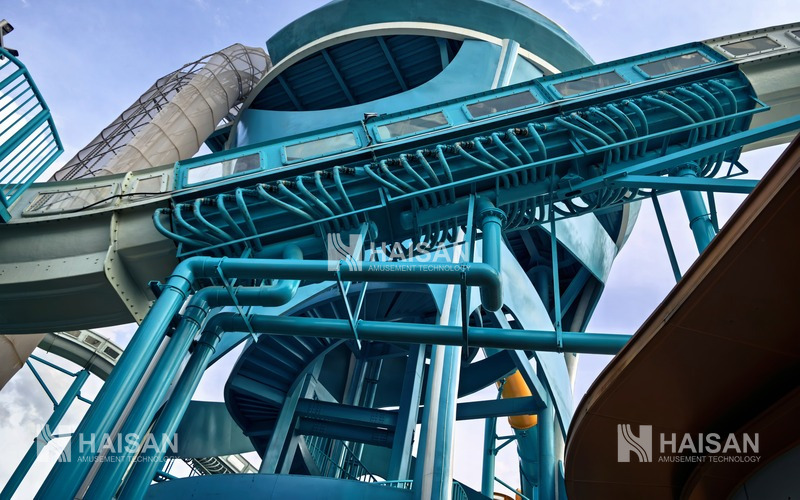
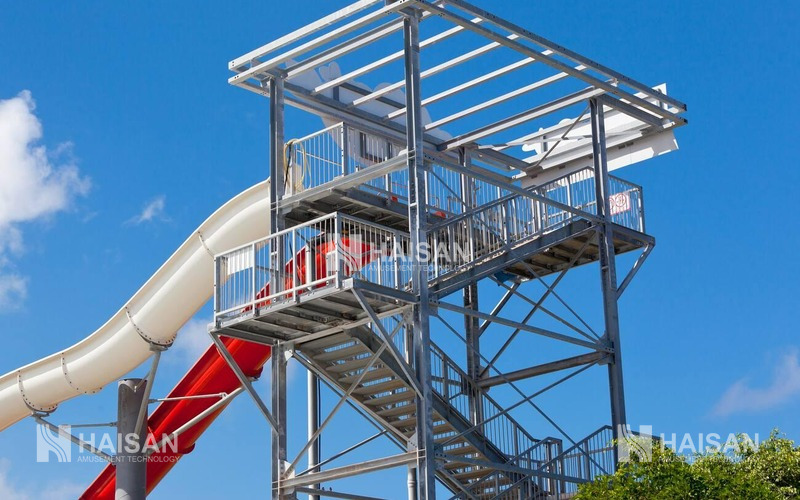
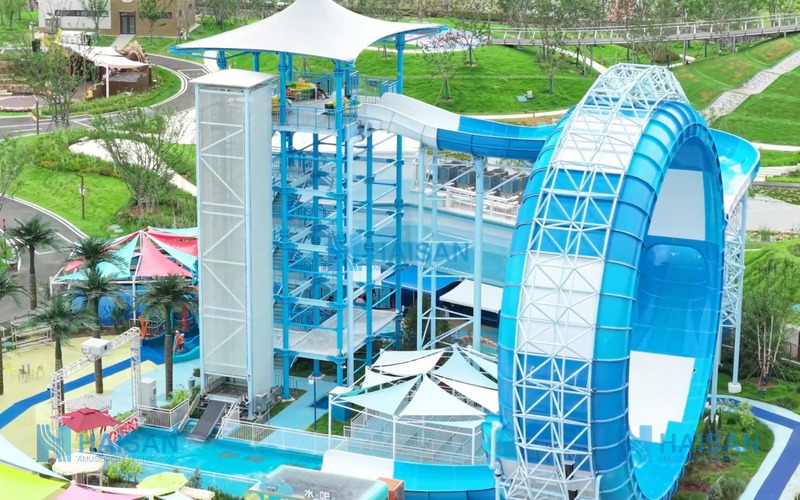
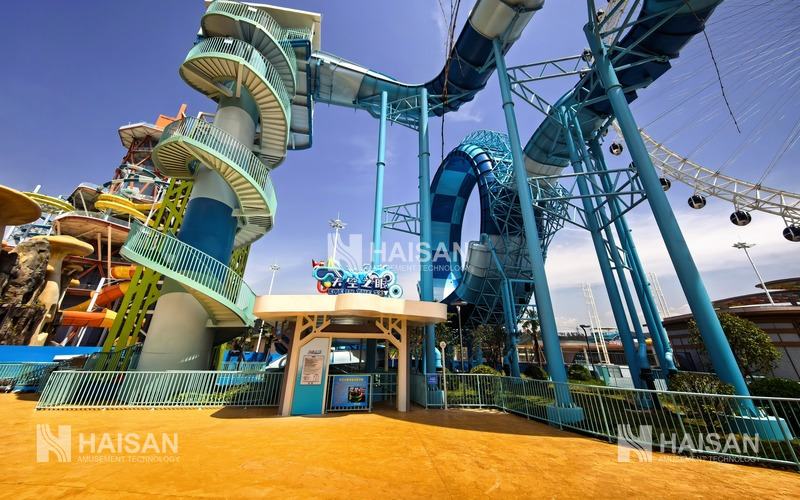
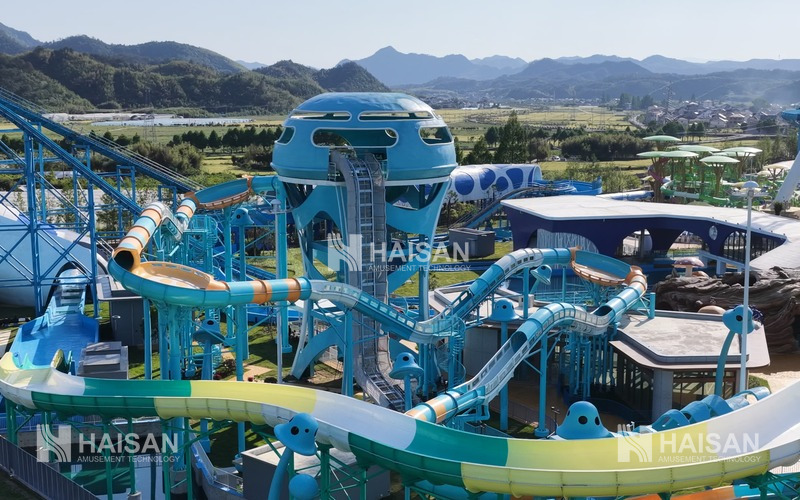
A complete slide-head platform with non-slip deck, 1.1 m guardrail, segregated operator station and interlocked red/green dispatch signalling with entry and exit sensors. Configurable for 1-6 lanes and throughputs to 900 riders per hour.
red until the previous rider has cleared the run-out plus a safety interval
entry and exit beams raise a fault when a rider overruns the expected ride time
non-slip deck with a 1% fall so water drains away from the operator
upgrade an existing tower without replacing its steelwork
Guests never notice the departure platform unless it fails. It is the point where a slide's capacity is either realised or wasted, and where the single most serious water slide incident - a rider entering a flume that is still occupied - is prevented. A well-designed platform lets one operator run four lanes safely; a badly designed one needs two staff on two lanes and still produces collisions.
Deck and Structure
The deck is non-slip FRP or GRP grating on a hot-dip galvanized steel frame, with a fall of about one percent away from the flume entrances so that splash water drains rather than pooling at the operator's feet. Deck loading is designed for a queuing crowd rather than for the riders actually on the platform, because queues form in exactly that place; five kilonewtons per square metre is the usual design figure. Stairs are at least 1.2 m wide with a continuous handrail, and where the tower serves several slides the stair and platform are separated so that a queue for one slide does not block access to another.
Dispatch Control
Interlocked dispatch is the core of the product. Entry and exit photoelectric sensors detect when a rider leaves the platform and when they clear the run-out; the signal stays red until both events have occurred plus a clearance interval. A maximum-ride-time timer raises a fault if a rider has not cleared within the expected duration, which is the fastest way to notice a stopped raft or a guest in difficulty. On multi-lane slides the same sensors become race timers, which guests enjoy and operators get for free. A pause button at the run-out lets the bottom marshal stop dispatch immediately without shouting up the tower.
Operator Position and Ergonomics
The operator stands behind a rail, at the flume entrance, with a clear view down the slide mouth and across every lane they control. The signal head is mounted at eye level facing the operator rather than the queue, because the operator is the person who must read it. Reach distances matter more than they sound: a launch gate, a pause button and a reset button all within arm's length is the difference between one operator per four lanes and one per two.
Safety and Compliance
Platforms are designed and manufactured to GB 8408-2018 and, where exported, to EN 1069-1/-2 for water slides. Guardrails are 1.1 m with a mid-rail and no climbable horizontal members; gaps are sized so that a small child cannot pass through. Flume entry mouths are radiused and free of exposed fixings, and every platform is load-tested before handover. Haisan supplies the structural calculations, sensor layout and commissioning record as part of the package.
Retrofit and Upgrade
Most of the value in this product is available to parks that already have slides. Replacing a manual gate with an interlocked signal, adding a non-slip deck overlay and reorganising the queue can lift effective capacity by 20-40 percent on the same flume, because the constraint is usually dispatch discipline rather than the slide itself. Retrofit kits are supplied to match existing tower steelwork and can be installed during a closed season.
To better serve you,please share your requirements,including the project's location,size, positioning, business type, and estimated opening date.