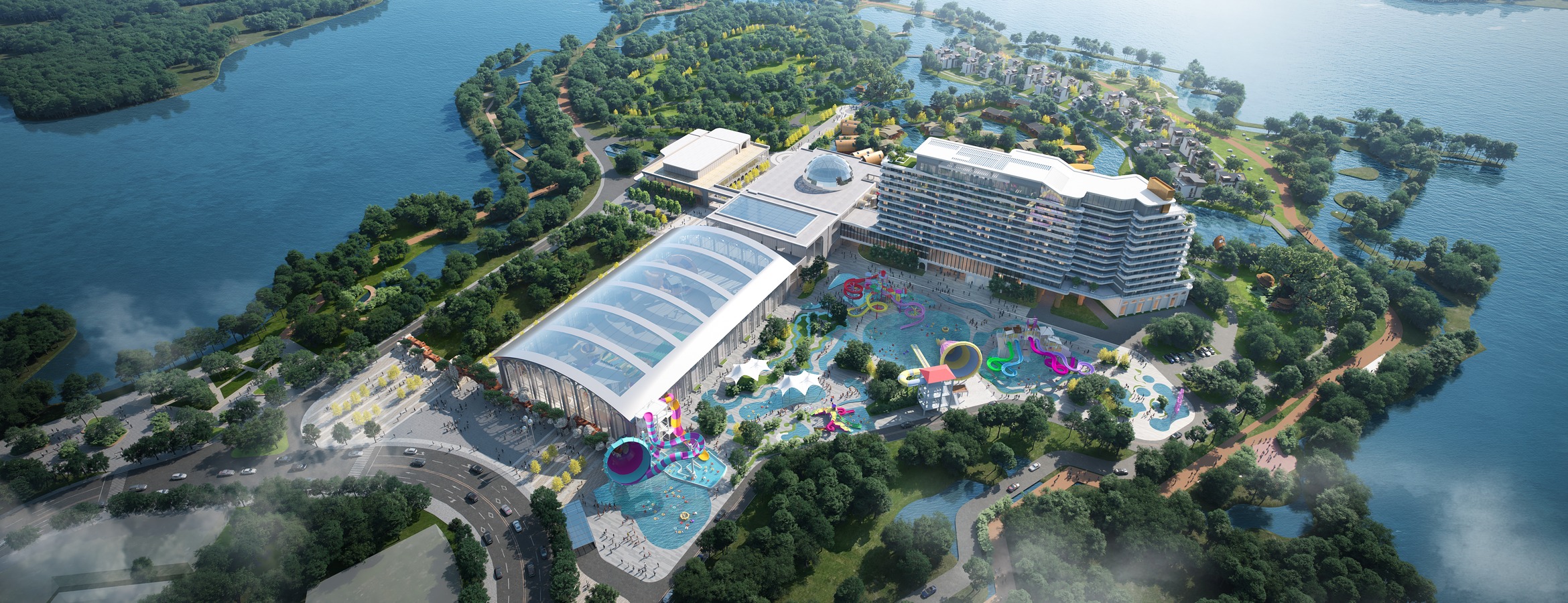
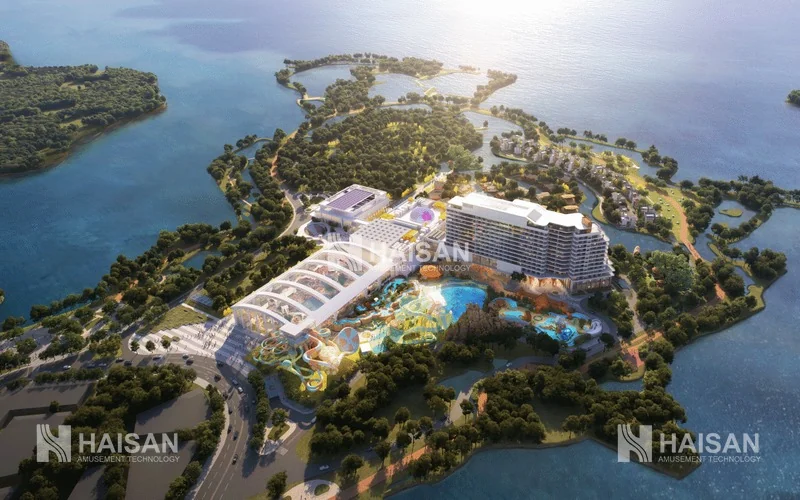
Two parks, one operating model: a Crystal Palace indoor hall runs year-round at constant temperature while a Tahitian outdoor village handles summer peaks, sharing back-of-house and staffing to keep the resort's water offer open in every season.
10,000 m² heated hall paired with 18,000 m² of themed outdoor water
three rider types sharing one compact structure
the first human body direct-slide river in Central China
a 1,800 m² outdoor centrepiece built as an event venue
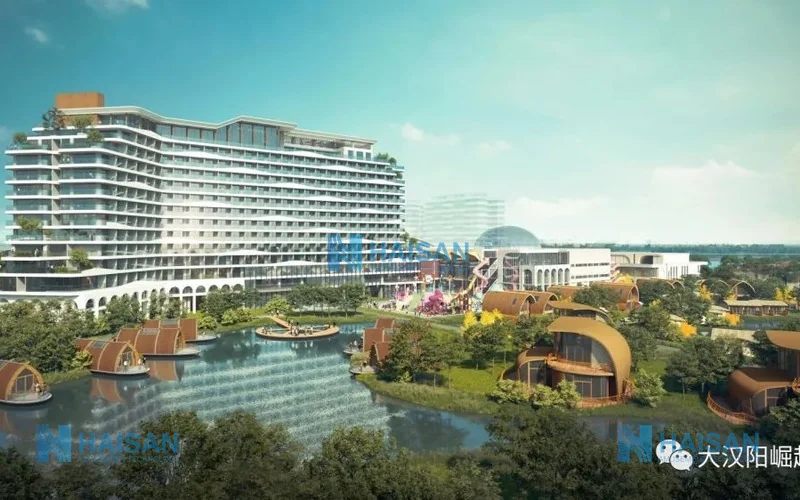
Wuhan's climate makes a single outdoor water park a seasonal business: hot, humid summers and cool, damp winters. The resort's answer is a dual-park plan - a 10,000 m² indoor heated hall themed as a Crystal Palace, paired with an 18,000 m² outdoor Tahitian village. The design task was not simply to build two parks, but to make them operate as one water destination across four seasons, with shared arrivals, shared back-of-house and a capacity curve that runs all year.
A single 28,000 m² outdoor park would trade for roughly five months a year in Wuhan. Splitting the same programme into an indoor and an outdoor park changes the economics: the indoor hall carries winter occupancy, school holidays and off-season events, while the outdoor park absorbs the summer peak that the indoor hall could never hold.
The split also changes the design language. The indoor park is an enclosed, controlled environment where theming can be total and lighting can be theatrical. The outdoor park is a landscape project where shade, planting and water views do the work. Each format is used for what it does best.
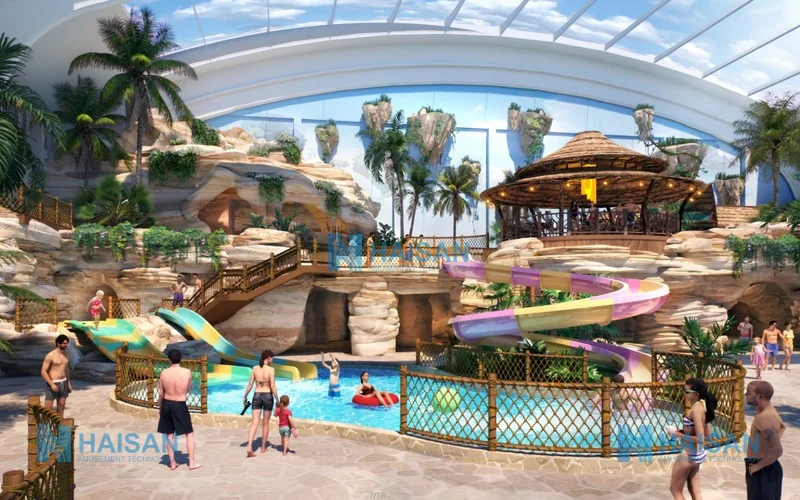
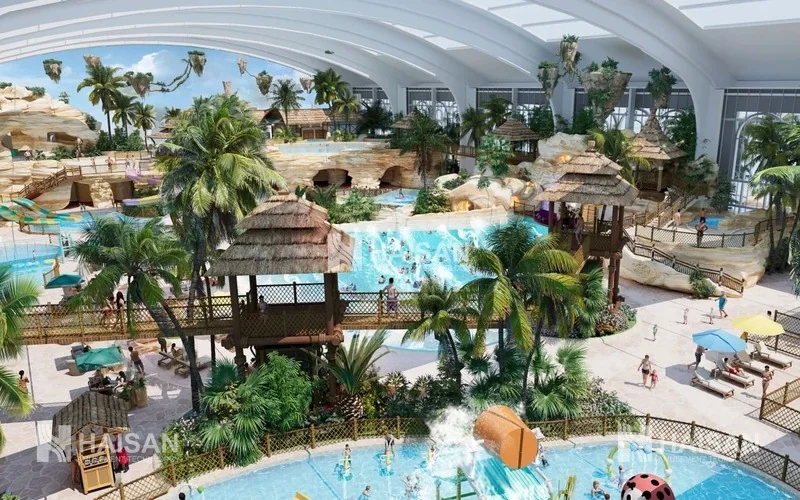
The 10,000 m² indoor park is planned as a themed interior rather than a shed with pools. A Crystal Palace narrative introduces tropical plantings, a controlled climate and theatrical lighting, so that guests in January experience a different season from the one outside the glass.
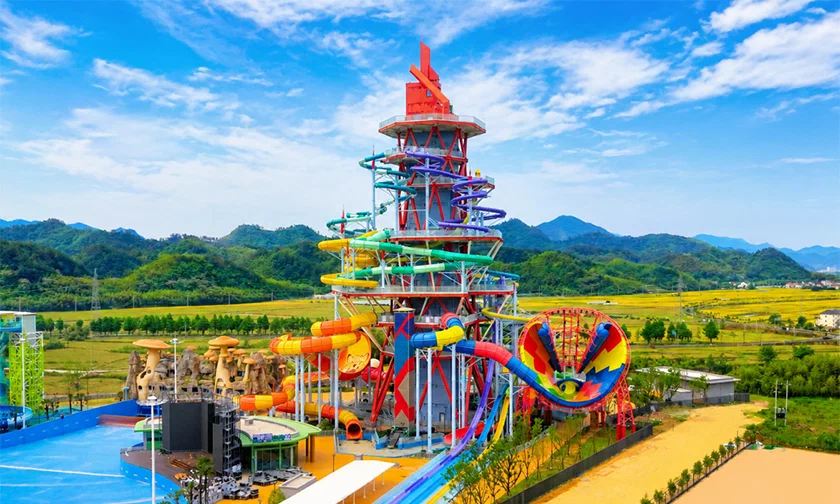
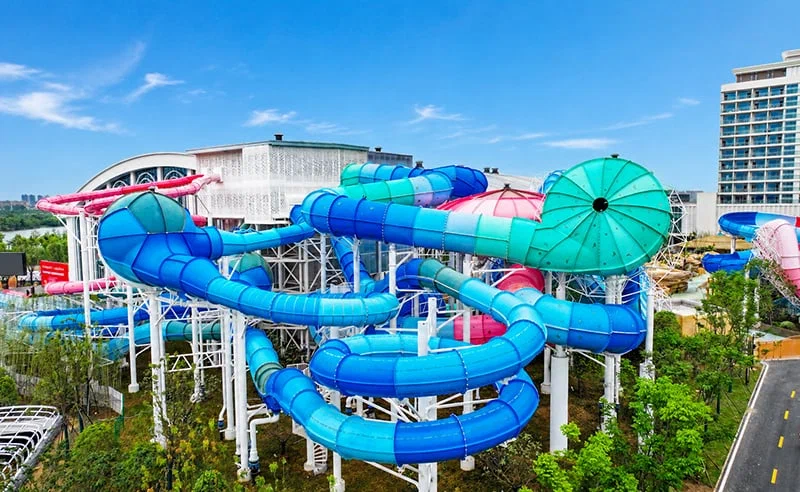
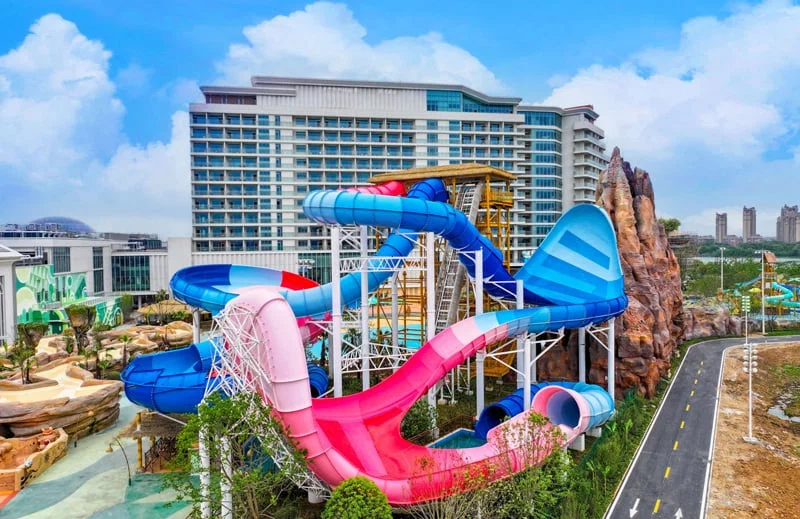
Its signature attraction is the Super Magic Space-Time Combination Slide, a seven-slide complex in which individual flumes weave through themed walls, allowing single-rider flyers, double racing tubes and four-person rafts to share one compact footprint. That density is what makes an indoor park viable: the same structure serves three rider types and three capacity streams.
An indoor water park is a building-services problem as much as a design problem. A 207-metre Human Body Direct-Slide Extreme River - the first of its kind in Central China - an Infinity Pool and an artificial wave pool all sit inside the hall, which means humidity control, chlorine containment, structural loading and acoustic treatment have to be designed together.
The plan groups the water bodies along one side of the hall and keeps the plant and dehumidification equipment in a dedicated service band. That separation protects the guest environment from chemical and noise exposure while giving maintenance direct access without crossing the pool deck.
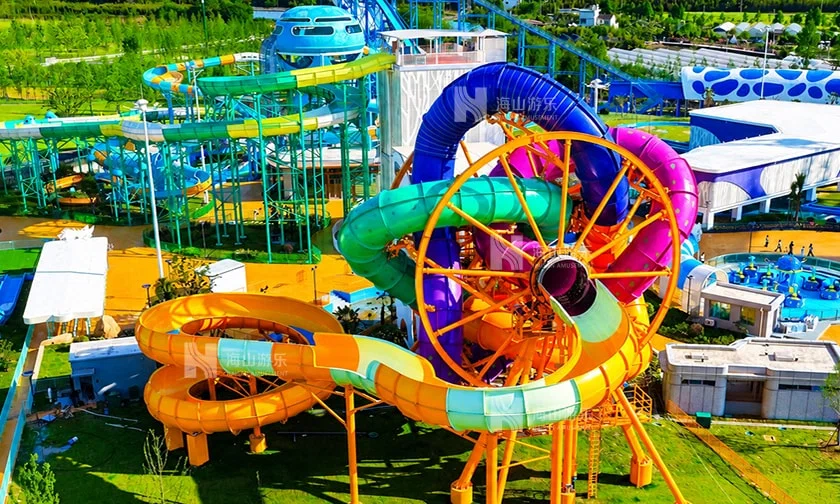
The 18,000 m² outdoor park is planned as a Tahitian tropical village with beach, forest and island settings. The theming is landscape-led: planting, thatch, water edges and level changes create the village, rather than a set of decorated buildings.
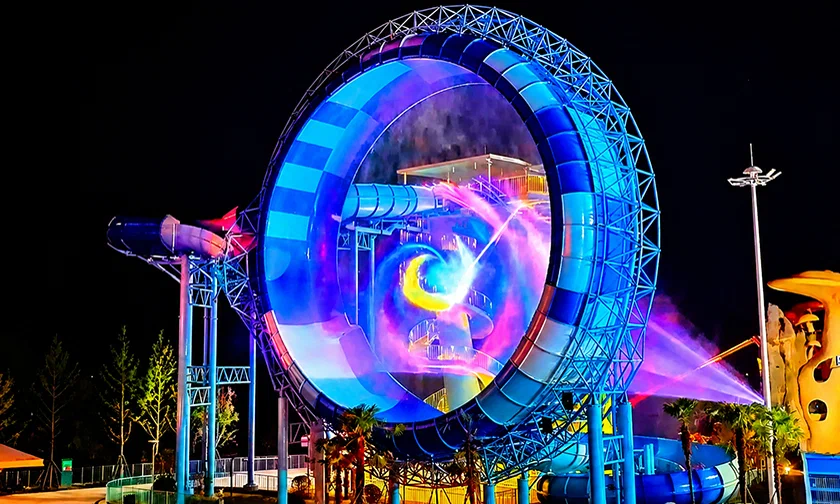
At its centre is a 1,800 m² Super Volcano Wave Pool equipped with a high-specification sound system, designed to work as both a water attraction and an event venue. The flagship thrill ride is the Interstellar Spiral Slide combined with the Giant Wave Rolling Slide, a dual experience that gives the outdoor park a headline without a very tall tower.
The two parks read as separate destinations to guests but share the infrastructure that would otherwise be duplicated: arrivals, ticketing, changing, storage, staff facilities, water treatment and maintenance workshops. The design places that shared band between the two halls so that either park can operate alone without staffing the other.
That flexibility is the operating model's key advantage. In shoulder season the resort can run the indoor hall only; in peak summer both parks open with one management team; for private events either side can be isolated.
The two themes are deliberately contrasting. The Crystal Palace is cool, bright and enclosed, with tropical planting under controlled light. The Tahitian village is warm, open and shaded, with beach sand, timber and thatch. A guest who visits in both seasons gets two different experiences from one resort, which supports repeat visits.
Comfort details carry the four-season promise: heated floors and changing areas indoors, shaded queues and misting outdoors, and material choices that stay comfortable to bare feet in both environments.
To better serve you,please share your requirements,including the project's location,size, positioning, business type, and estimated opening date.