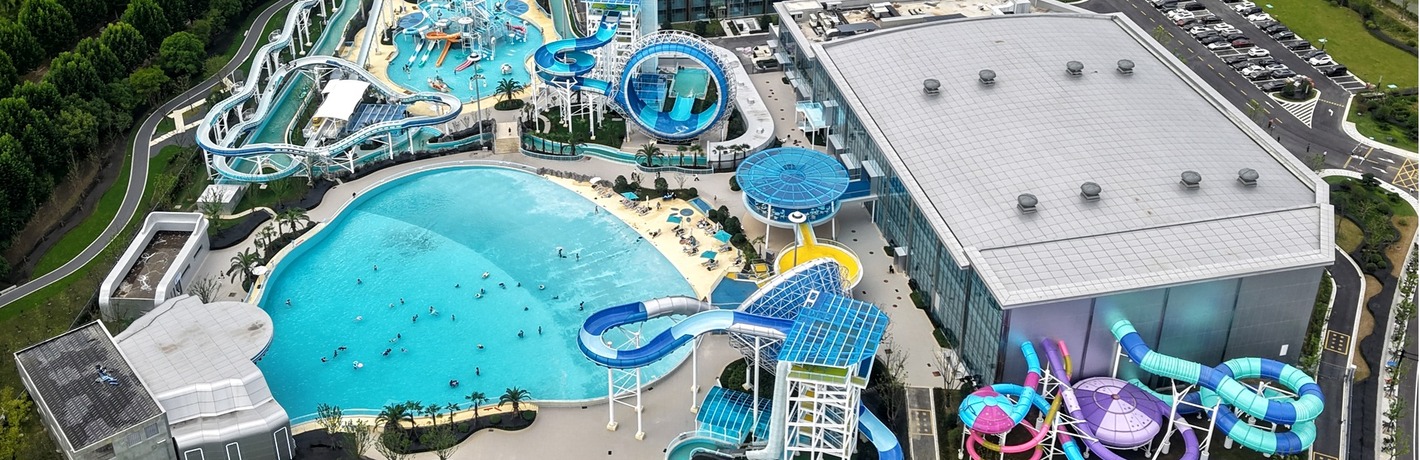
When planning an indoor water park, many cultural-tourism investors and resort development teams assume that a constant-temperature building with heating and dehumidification systems is enough to sustain year-round operation. After opening, however, many projects see thin autumn and winter attendance, a narrow audience, idle equipment and persistently high energy bills. Constant temperature solves water temperature; it does not answer who will visit in every season or why they would return. That is the core reason many heated indoor water parks lose money in the off-season.
The root of the problem is treating an indoor water park as an outdoor park with a roof over it and copying an outdoor equipment list. Extreme outdoor slides target young summer visitors; moving them indoors does not broaden their appeal, and they rarely draw repeat family visits in autumn and winter. With 24 years in the water leisure industry and a large portfolio of four-seasons water park projects, Haisan has found that year-round operation does not come from a single headline attraction. It depends on top-level design of the ride mix for a constant-temperature environment, established at the project positioning stage.
Backed by in-house R&D and structural calculation capability, Haisan provides an integrated service covering concept development, planning, equipment customisation, installation and operational consultancy. Rather than following the usual sequence of building the hall first and selecting equipment afterwards, the scheme defines the ride mix around local climate, audience, site and revenue targets instead of applying a standard product catalogue.
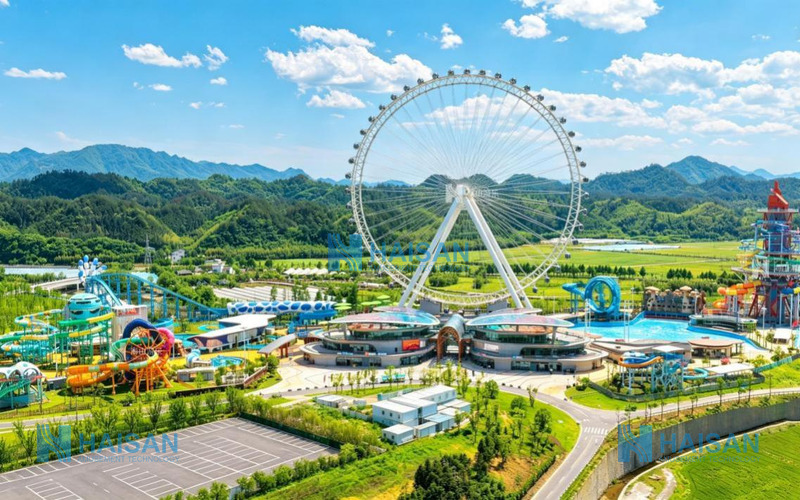
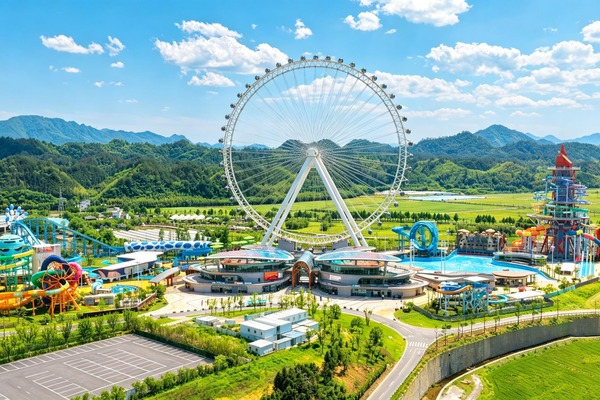
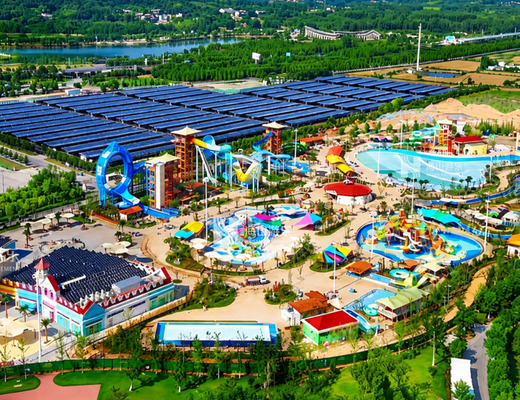
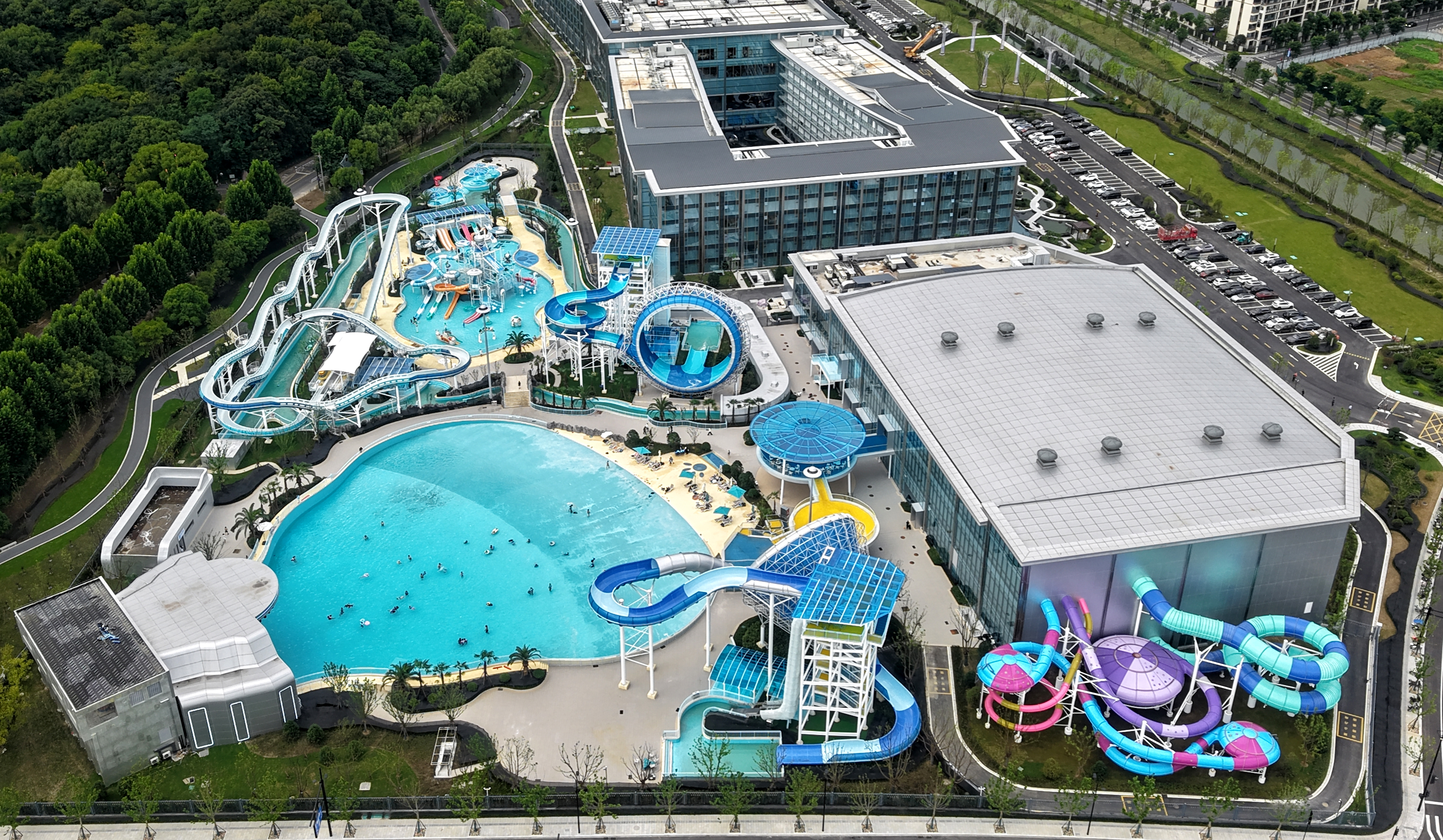
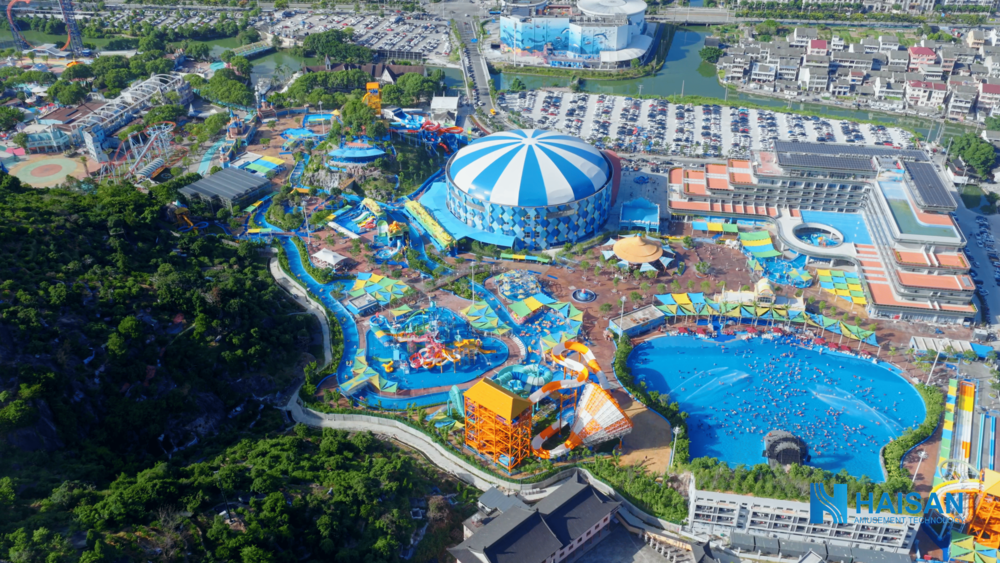
Aerial view of an all-season water park with indoor and outdoor zones and Haisan water attractions.
A ride mix that offsets the limitations of a heated hall and supports twelve-month trading is built around three directions:
First — build a graded experience ladder to fill the off-season attendance gap.
Constant temperature only addresses the temperature of the water. Retaining visitors requires an experience ladder covering all ages. Interactive Water Play Structures, shallow water play zones and family slides serve parent-child leisure and form the baseline in autumn and winter; Drifting Rivers and medium-sized Wave Pools suit whole-family visits; and Haisan's self-developed extreme slides target thrill-seeking younger guests. Wuhan Urban Construction Kaiyuan Senbo Resort is a representative example: Haisan built a graded ride matrix in which the indoor constant-temperature zone uses family attractions to stabilise winter and rainy-day attendance, while outdoor thrill rides absorb the summer peak. The project won a Platinum award at the 2025 London Design Awards, confirming the value of this approach.
Second — use a linked indoor-outdoor, seasonally phased layout to control heating and dehumidification costs.
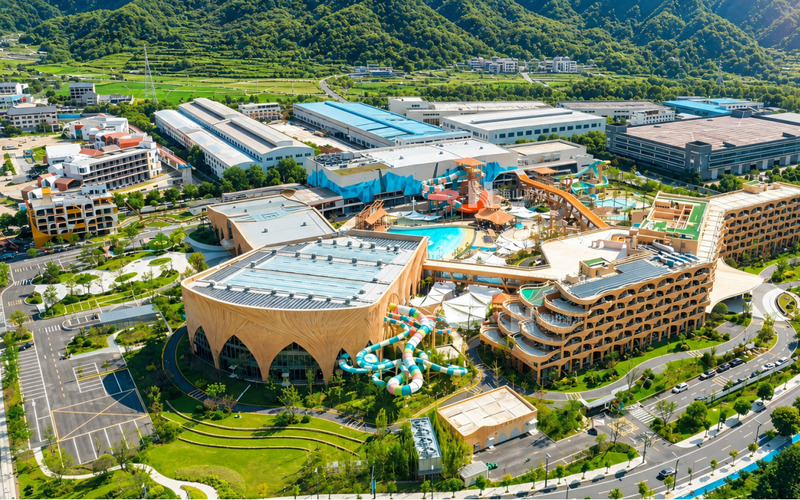
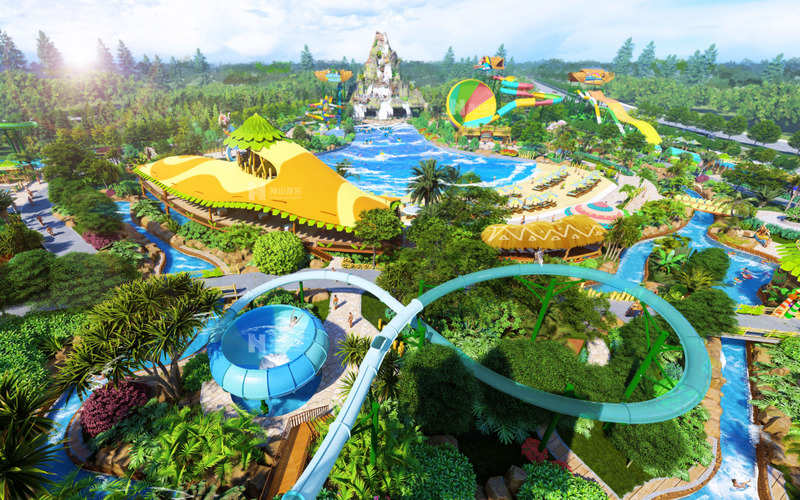
Conditioning an entire park indoors creates a permanent, high fixed cost for heating and dehumidification. At the planning stage Haisan coordinates circulation, ticketing and guest flow across both zones: the indoor section concentrates essential family attractions and can operate independently through rain, snow and winter, while outdoor drawcard slides and wave pools run only in summer. Tonglu Kaiyuan Senbo Resort Water Park applies this model — a rainforest-themed indoor hall acts as the year-round baseline business and the outdoor area serves only the peak season, cutting wasted heating and dehumidification load and improving return on investment.
Third — adapt equipment to a sealed indoor environment to reduce the load on the HVAC system at source.
One factor is often overlooked: standard water attractions spray large volumes of water and generate heavy evaporation. In a sealed, heated hall this continuously loads the dehumidification system and drives up year-round operating costs. Haisan optimises water discharge and spray structures specifically to suppress vapour dispersion, and its self-developed immersive light-and-shadow slides also enable evening operation, extending opening hours and creating additional revenue. Lanzhou Wanda Water World is a purely indoor, four-season project: at the planning stage Haisan applied vapour optimisation across the full set of Water Play Structures, Wave Pools and slides, controlling humidity and energy use inside a sealed commercial complex while a broad all-age ride mix attracts family visitors consistently throughout the year.
On the compliance side, Haisan holds a Special Equipment Production Licence for large-scale amusement devices and all self-developed equipment has completed type testing. During planning the team simultaneously checks site loads, guest-carrying capacity, water supply and drainage, and heating and dehumidification loads, removing at source the risks of rework, failed acceptance inspections and delayed opening.
Constant temperature is only the enabling condition for year-round operation. A scientifically assembled ride mix is what breaks the seasonality trap and determines attendance and revenue across the full year. When planning an indoor water park, focus beyond the HVAC system: put an experience system matched to peak and off-peak demand in place first, and the heated hall can deliver its full year-round commercial value.
© Guangdong Haisan Amusement Technology Co., Ltd. · www.gzhaisan.com
To better serve you,please share your requirements,including the project's location,size, positioning, business type, and estimated opening date.