Investors often build a water park budget by comparing equipment quotations, treating the purchase price of slides and Water Play Structures as the main outlay. In practice, equipment procurement typically accounts for only 50–60% of total project investment. Hidden expenditure — foundations and civil works, water treatment, heating and energy, transport and installation, inspection and maintenance — is what most often pushes a budget over.
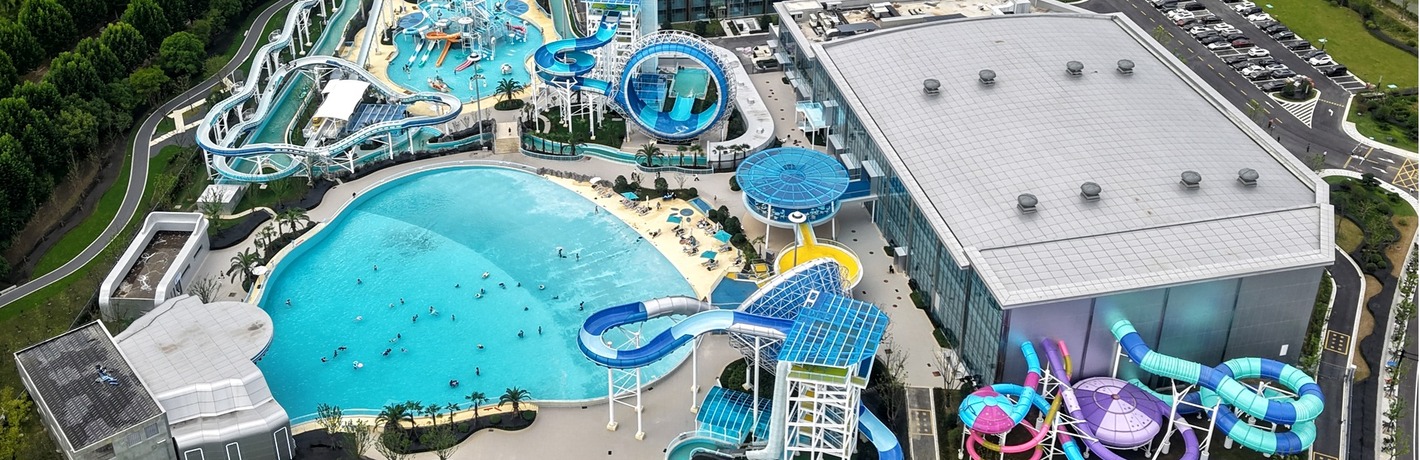
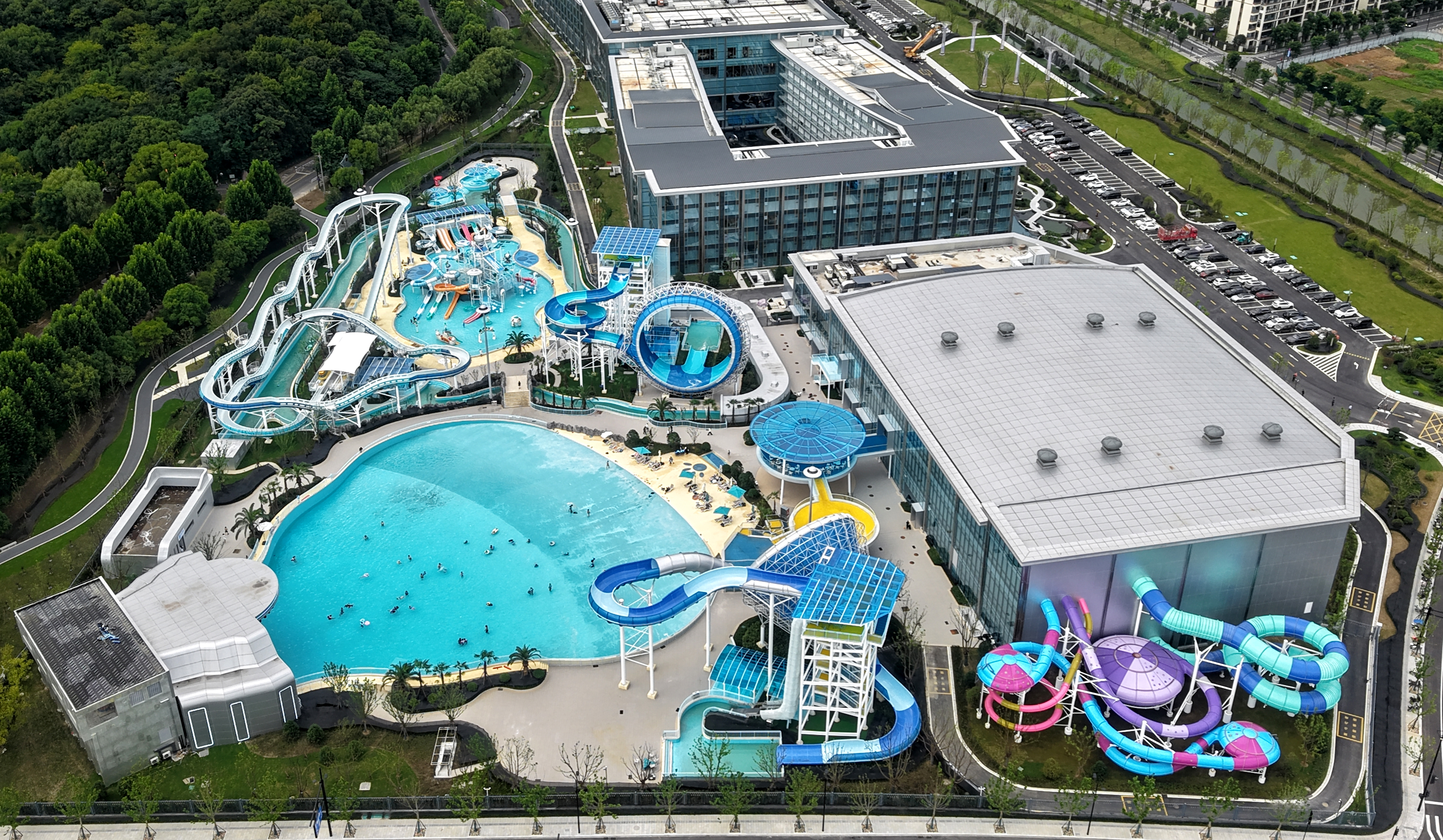
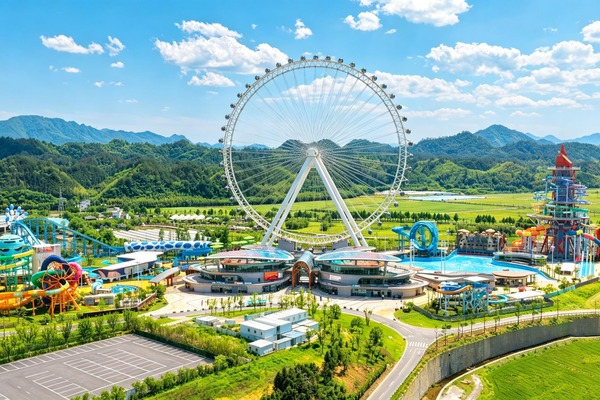
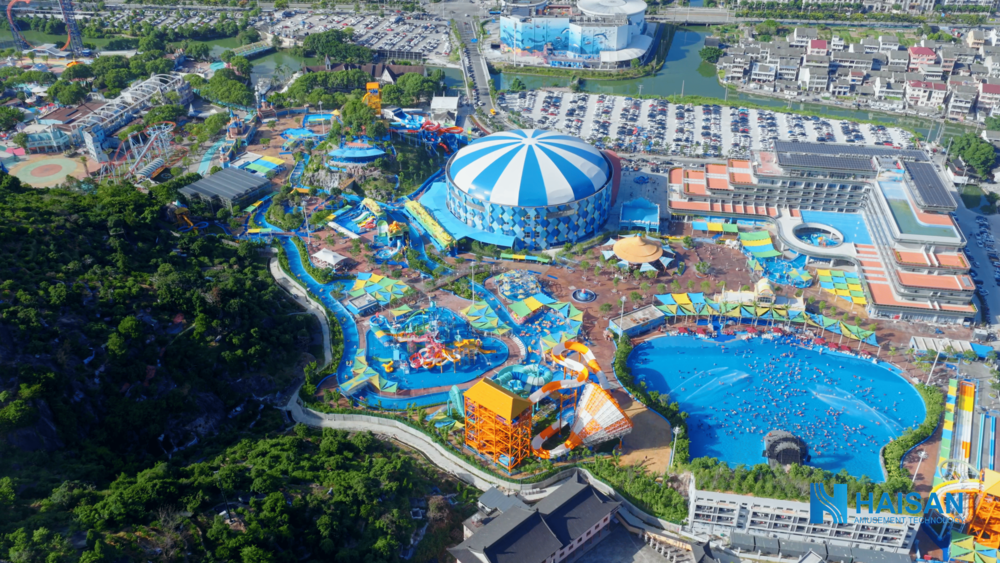
Aerial view of a themed water park with water play structures and rafting rides supplied by Haisan.
1. The Misconception: An Equipment Quote Is Not the Total Project Investment
Many investors approve a project on the basis of an equipment quote, only to discover during construction that the slides were the tip of the iceberg. Between a drawing and an operating attraction there are substantial costs that never appear on the quotation. These hidden costs are rarely flagged proactively, and by the time they surface the window for adjustment has closed — at best the budget increases, at worst there is rework and a delayed opening.
2. Six Hidden Costs of Water Park Equipment
1. Civil and structural works. Large slides and Wave Pools impose strict requirements on foundation bearing capacity and embedded steel. Ground conditions alone can multiply civil costs several times over, so the civil budget cannot be fixed until the equipment scheme is defined.
2. Water supply, drainage and treatment. The circulation and filtration systems for wave pools and drifting rivers are separate specialist works. Pipe routes and plant-room space must be reserved at the outset; retrofitting them later is far more expensive.
3. Heating and energy. Heating and dehumidifying an indoor hall is a permanent fixed cost. Standard attractions spray heavily and evaporate large volumes of water, continuously raising electricity bills — the most commonly underestimated recurring hidden cost.
4. Transport and installation. Oversize transport, on-site lifting and work at height for large amusement devices vary with project distance and site conditions.
5. Inspection and compliance. Water park attractions are classified as special equipment and require type testing and special-equipment inspection. If manufacturer qualifications are incomplete or the design does not match the structural loads, rectification costs and lost trading time will far exceed any saving on the equipment itself.
6. Maintenance and spare parts. Slide surface wear, pumps and seals all require periodic replacement. If spare-part supply and maintenance support are not locked in at procurement stage, the operator is exposed to price increases later.
3. How Haisan Locks Hidden Costs In at the Front End
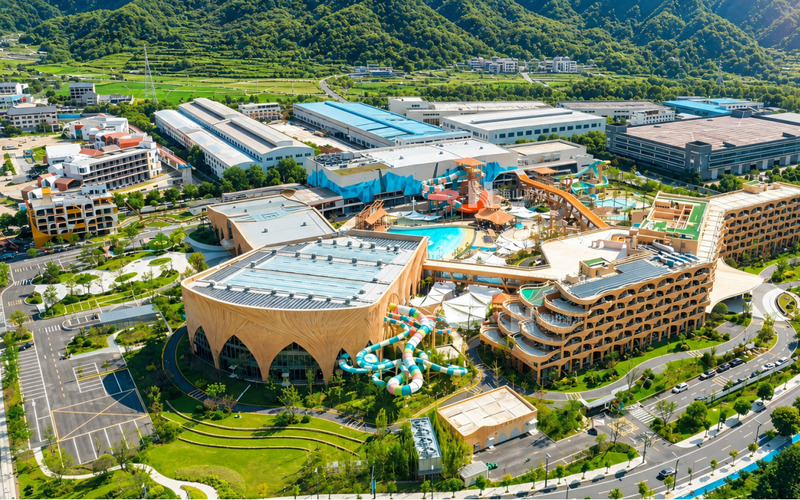
Haisan is an NEEQ-listed National High-Tech Enterprise and a drafting organisation of the national standard GB/T 18168, General Technical Conditions for Water Amusement Facilities. Using its integrated water park planning, design, construction and management capability together with in-house R&D and structural calculation, the team checks site loads, guest capacity, water supply and drainage and heating loads during the planning stage, and brings civil interfaces, water treatment and energy demand into the investment estimate. All self-developed equipment has completed type testing and is delivered with documentation that meets acceptance requirements. Operational consultancy and spare-part support after handover remove the risk of uncontrolled maintenance costs. Wuhan Urban Construction Kaiyuan Senbo Resort is a representative case: whole-life expenditure was calculated comprehensively at the front end, so investment, programme and acceptance risks were controlled at source.
4. Three Questions to Check Your Budget Against
1. What is included beyond the quote? Ask the supplier for a whole-life estimate covering civil interfaces, water treatment, installation and inspection, rather than comparing bare equipment prices;
2. Does the scheme meet compliance requirements? Confirm that manufacturing licences and type test reports are complete and that structural and heating/dehumidification loads have been checked;
3. How will after-sales service be delivered? Make sure maintenance, spare parts and operational support are written into the contract.
A water park budget is not won by the lowest price but by identifying and including every hidden cost as early as possible. Engaging a full-chain supplier at the planning stage is what makes the investment genuinely controllable.
© Guangdong Haisan Amusement Technology Co., Ltd. · www.gzhaisan.com
To better serve you,please share your requirements,including the project's location,size, positioning, business type, and estimated opening date.